Overloaded Power Points: What It Means and What to Do
A power board stacked three deep, or a point that's warm under load: both are the same problem showing up in different ways.
Too much current is asking to go through one place at once. If anything feels hot right now, stop and call (02) 9134 9024.
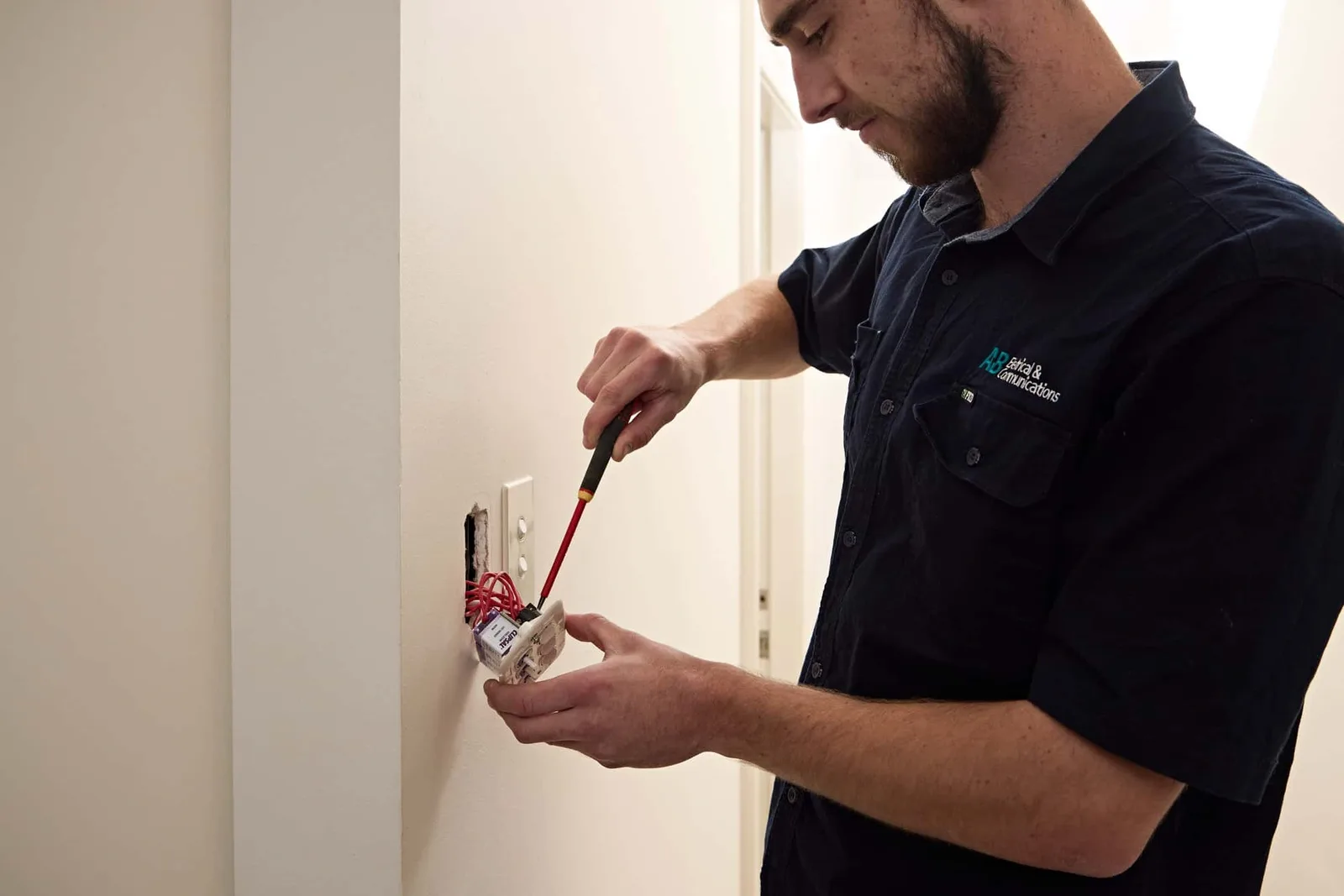
What an Overloaded Power Point Actually Means
Every power point and the circuit behind it is rated to carry a set amount of current safely.
Push more through it, several appliances on one board, a heater and a kettle on the same run, and that rating gets tested.
The point itself might hold for years under that strain. Or it might start warming, discolouring, or cutting out long before anyone notices a real problem building.
Unlike a sudden fault, overload is usually gradual. A household adds a few more devices each year to a point that was only ever wired for a lamp and a radio.
Two decades on, that same point is running a laptop charger, a modem and a phone dock, none of which existed when the wiring went in.
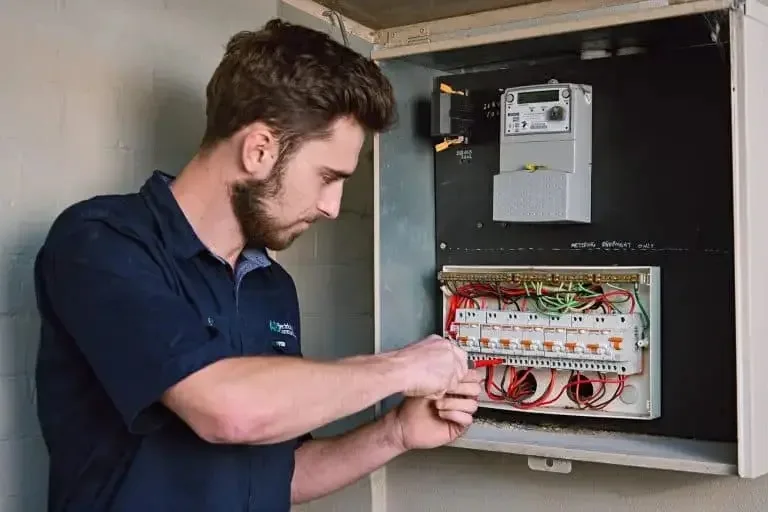
Six Causes, From Common to Rare
Roughly in order of what shows up most on a call-out:
- A double adaptor plugged into another double adaptor, stretching one outlet across far more devices than it was rated for.
- A heater or an appliance with a heating element running alongside something else demanding on the same run.
- One original socket now carrying a laptop, a monitor, a phone charger and a lamp that used to be its only job.
- A single circuit stretched to cover several rooms, so demand from opposite ends of the house lands on the one run.
- A cheap multi-outlet board with poor internal contacts, generating its own heat regardless of what's plugged in.
- A terminal screw behind the faceplate that's never been fully tight, quietly reducing how much the point can safely carry.
None of these need several things to go wrong at once. Usually it's one factor doing all the damage, and finding which one decides whether the fix is a new point or a proper repair.
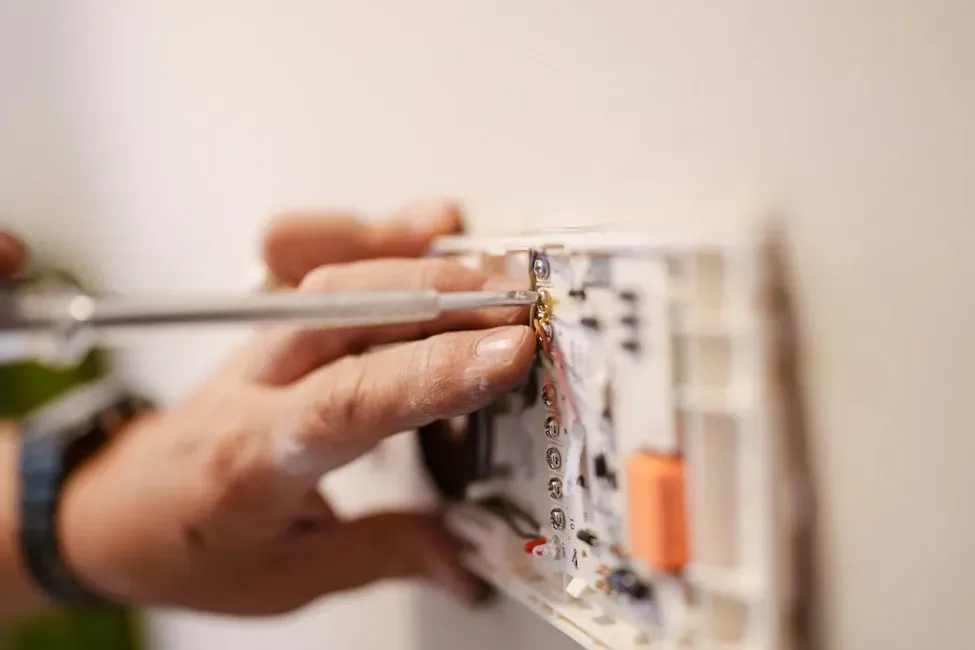
Is an Overloaded Power Point Dangerous?
Crowding alone is a low-grade risk. Add heat and it becomes a real one.
Ring us without delay when any of these show up:
- touching the socket or the plate around it tells you it's genuinely warm
- there's a faint plastic smell near the point when devices are running
- the same point or board has cut power out more than once this week
- a socket looks scorched, bubbled or darker than the plate around it
None of those signs need to be dramatic to matter. A quietly warm point is doing exactly the same slow damage as one that's visibly smoking.
Simple crowding without any of the above, several plugs on one board but everything cool, holds fine until we can get out for a normal booking.
What To Do Right Now
- Pull the plug on anything running through a point you've noticed getting warm.
- Spread devices across two or three points instead of one, using whatever's free nearby.
- Find the breaker for that circuit and switch it off should the point stay warm after unplugging.
- Ring (02) 9134 9024 and walk us through what was plugged in.
How We Fix It
First job on site is finding out exactly how much the circuit is carrying against what it's rated to handle.
Sometimes the answer is straightforward: run a second point into the room so the load has somewhere else to go.
Other times the circuit itself is the ceiling, and no amount of extra points changes that until the circuit gets more headroom.
A point with visible heat damage always comes out rather than going back in, since scorched contacts inside the wall can't be relied on again.
We test the new work under real load before we leave, and issue a Certificate of Compliance wherever the job is notifiable.
What We See on Berowra's Older Streets
Streets like Woodcourt Road carry a good stretch of the suburb's original 1960s and 1970s builds, where most rooms had one double socket and nothing more.
That standard made sense before laptops, chargers, routers and streaming boxes became part of daily life in every room of the house.
The point itself usually still works fine. It's the number of things plugged into it that's changed, not the wiring behind the wall.
We see the same pattern on the steeper bush blocks further along the ridge, where a home office corner has been added to a room with a single original point and no thought given to load.
Keeping It From Coming Back
Once demand is properly spread across enough points, nothing should need babying to stay safe. What actually helps:
- Adding extra outlets via our power points service so no single socket carries a whole room's demand.
- Getting the circuit reviewed via electrical repairs where one run covers more of the house than it should.
- Retiring cheap power boards for a quality one, or better, a dedicated point for the appliance that needs it.
- Booking a board assessment via switchboard upgrades if overload keeps surfacing at more than one point.
Ongoing warmth or repeat cut-outs after you've eased the plugs off a point means the real problem sits at the circuit, not the crowded point on top of it.
Nearby Suburbs and Related Faults
Discolouration or a burning smell at the point itself belongs on our burnt outlet guide instead. A circuit cutting out cleanly with no heat involved fits our tripped breaker guide better.
We cover the same fault-finding in Asquith and Mount Colah as well as Berowra.

Get in Touch Today Before It Gets Worse
A crowded power board is worth sorting before it becomes a warm one. Call (02) 9134 9024 and tell us what's plugged in where.
We'll work out whether it's a load problem, a board problem, or both.
Common questions
Common Overloaded Power Points FAQs
The questions Berowra homeowners ask most about crowded points and power boards, answered honestly.
Is an overloaded power point actually dangerous, or just annoying?
Both, depending on how far it's gone. A point running warm under a full power board is a genuine fire risk, not just an inconvenience worth ignoring.
Can I keep using a power board while I wait for someone to look at it?
Only if it's cool to touch and nothing on it has tripped. Anything warm or that's already cut out once should stay unplugged until we've had a look.
Will adding a safety switch fix an overloaded point?
No, a safety switch protects against earth leaks, not overload. An overloaded point still needs the load spread out or a new circuit added.
How do you tell if a point is overloaded or if something else is wrong?
We test the circuit and check for heat at the point and the connections behind it. That separates a genuinely overloaded run from a fault that just looks the same.
Is it my power board's fault or the point itself?
It can be either. A cheap power board can overheat on its own, while a point wired decades ago may simply never have been built for today's load.
Do you add new points instead of just telling me to unplug things?
Usually, yes. Extra points spread the load properly, which solves the problem instead of just moving it somewhere else in the house.